Are you a man or a woman?
Man With A Child In His Eyes - Hue & Cry
Describe yourself:
I'll Be Here Awhile - 311
Not A Sinner, Nor A Saint - alcazar
Perfect Gentleman - wyclef jean
Better Of Two Evils - marilyn manson
The Wanderer - U2 & johnny cash
Lazy - X- Press 2
Twisted & Bent - trash can sinatras
Easy To Please - coldplay
A Quiet Man - jim noir
Passenger - Powderfinger
Firestarter - prodigy
Insatiable - Darren Hayes
Wicked Soul - kubb
Freebird - lynyrd Skynyrd
What do people think when they are around you?
Crazy - Gnarls Barkley
Wrapped Up In Books - Belle & Sebastion
The Joker - steve miller band
Bloody Mother Fucking Asshole - Martha Wainwright
Poor Misguided Fool - starsailor
How are you feeling?
The World's Gone Mad - Handsome Boy Modeling School
Slave To The Wage - placebo
Alive N Kicking - simple minds
All Right Now - free
Singing In My Soul - Fly My Pretties
Describe your new relationship with your partner or suitor(s)
What relationship? Its just...
Me, Myself & I - de la soul
I Still Haven't Found What I'm Looking For - u2
Someone New - eskobar featuring heather nova
You Don't Have to Be Rich - prince
Talk To Me Like Lovers Do - Eurythmics
Throw Your Arms Around Me - Hunters & Collectors
Tease Me - Chaka Demus
Settle Down - Breaks Co-Op
Where would you like to be right now?
Ocean - cerys matthews
Loch Lomond - runrig
Candy Shop - 50 cent
Christmas & Glasgow - Deacon Blue
Let's Get Out Of This Country - Camera Obscura
The Beautiful Side Of Somewhere - the wallflowers
From The Country To The City - pleasure featuring ed harcourt
Barcelona - Freddie Mercury & Monserrat Caballe
Paradise City - Guns N Roses
Other Side Of The World - KT Tunstall
Trains To Brazil - Guillemots
How is your life?
Nobody Said It Was Easy - Coldplay
When the Going Gets Tough The Tough Gets Going - Billy Ocean
Everything's Gonna Be Alright - Bob Marley
Don't Worry Be Happy - Bobby Mcferrin
What would you choose if you had only one wish?
C'mon Everybody - Eddie Cochrane
Peace The Fuck Out - travis
Better World A-Comin' - Woody Guthrie
Write a quote or a famous sentence:
When You're Smiling (The Whole World Smiles With You) - Louis Armstrong
Screw that I'm not doing any more that could have went on and on and on and on and on and on and..............
Monday, 20 November 2006


Saturday, 18 November 2006
The Road Less Travelled
I’m not much of a driver. I wasn’t one of those people who rushed out to get my drivers license as soon as I possibly could. To be honest I prefer walking or cycling, failing that I will use the train if I am going into the city. City driving frustrates me, far too many bad drivers, one-way street systems and red lights to allow it to be an enjoyable experience. Motorways just bore me.

Single-track road in Glen Lyon
Today I just needed to get away from it all, it had been a long hard week and the rain hadn’t made it any easier so I headed out to Perthshire. I deliberately stayed away from the open roads and stuck to the wooded roads, before long I found myself in Crieff which is where I would have liked to have begun this drive. Driving past
This particular route took me along some of the most dramatic small roads in central 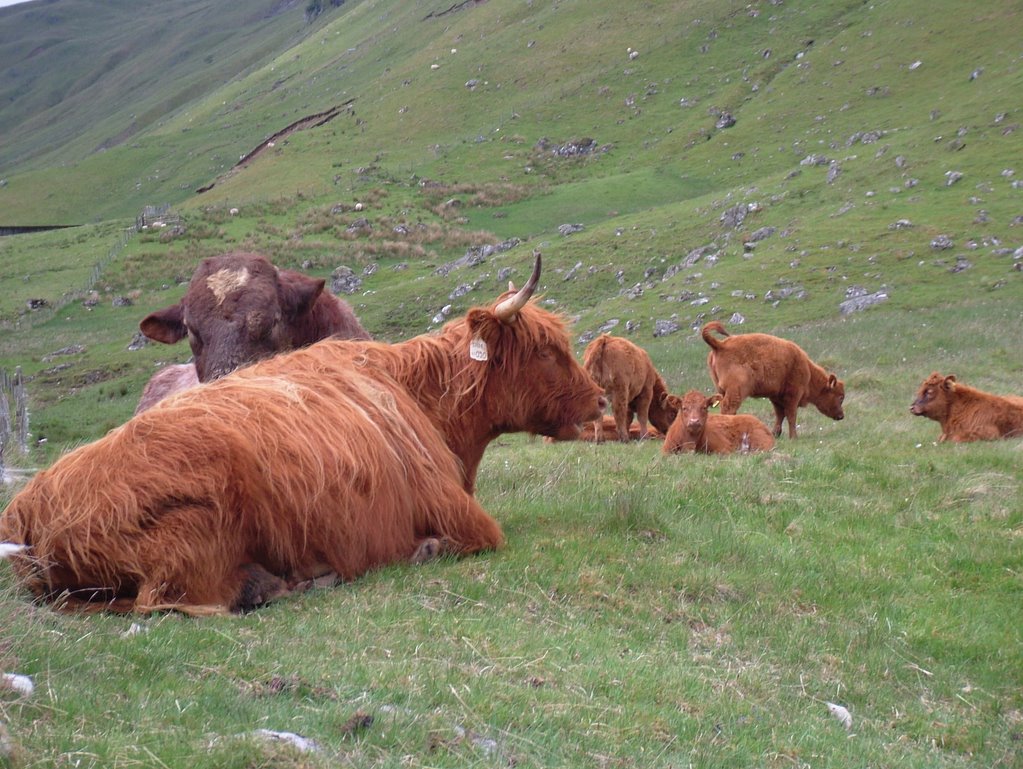
This road takes you quickly into a hidden valley. There are frequent blind summits and two entertaining humpback bridges (the first in particular can be quite startling). The land at times seems almost hostile, a feeling added to by the sight of ruined dwellings long since deserted by crofters forced from the land. The dreaded hairpins appear in the distance, a slow and low-gear approach gets you round in one piece. You climb towards the rounded tops of hills, scoured by glacial erosion into volcanic-shaped craters and rock-strewn lunar landscapes and finally reach a plateau where, as you can pause in the layby, you find acres and acres of silence.
The road soon moves abruptly downhill and the small town of 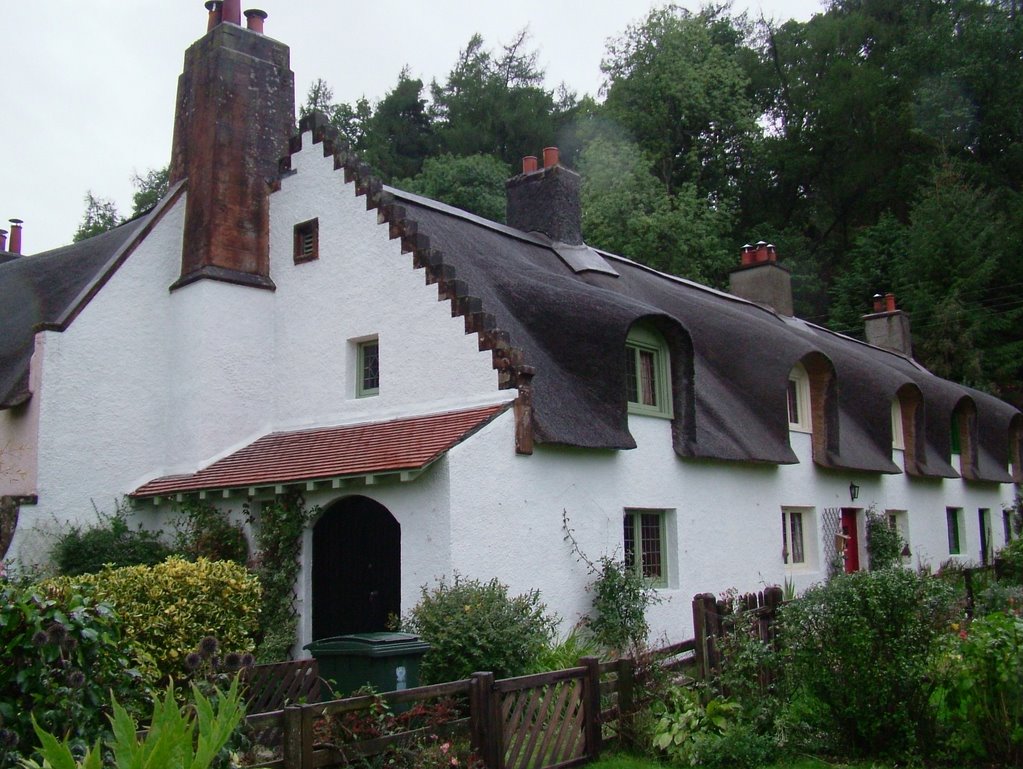
Fortingall
Next stop on the route is the charming
At the far end of the village, next to the church, is the thing that most people associate with this part of the world the ancient yew tree. It is thought to be 5000 years old and the oldest living thing in
On the hill behind this the Romans built a fort. It is rumoured that Pontius Pilate was born here but such a claim seems a bit extreme when you consider this area would have been at the very edge of the 
Next Glen Lyon beckoned. The start of the glen is a sunny birch tunnel close to the Birks of Aberfeldy, and the sight of white-silver bark struck by the early afternoon sun is wondrous. The glen snakes westwards and reveals the mountains beyond in 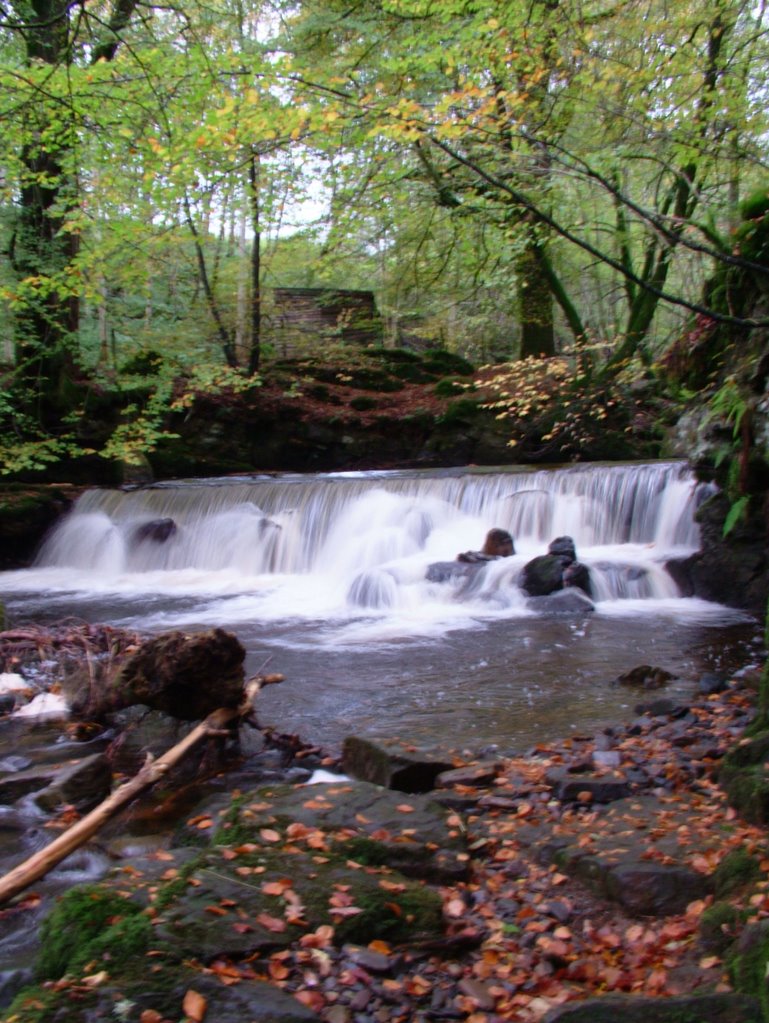
Birks of Aberfeldy
At this point, I left the glen road to head to my final destination: Ben Lawers. This final stretch of road feels as though it could be in the furthest reaches of the
However enough of my bitching if you ever get the pleasure of taking this drive and walk I would encourage you to sit in the warmth of the sun in the long reedy grass drinking in the view below before returning to the car park, but that might mean going in summer, today though nice was a little on the cold side. Anyway from there you can watch as the sunlight flickers on the surface of the mighty Loch Tay. If you are lucky to have a day like today the sky will be pure blue allowing the daylight to dance on the summits of Ben More and the Tarmachan Ridge.
Loch Tay
Friday, 17 November 2006
Oye!!! What Happened To My Post?
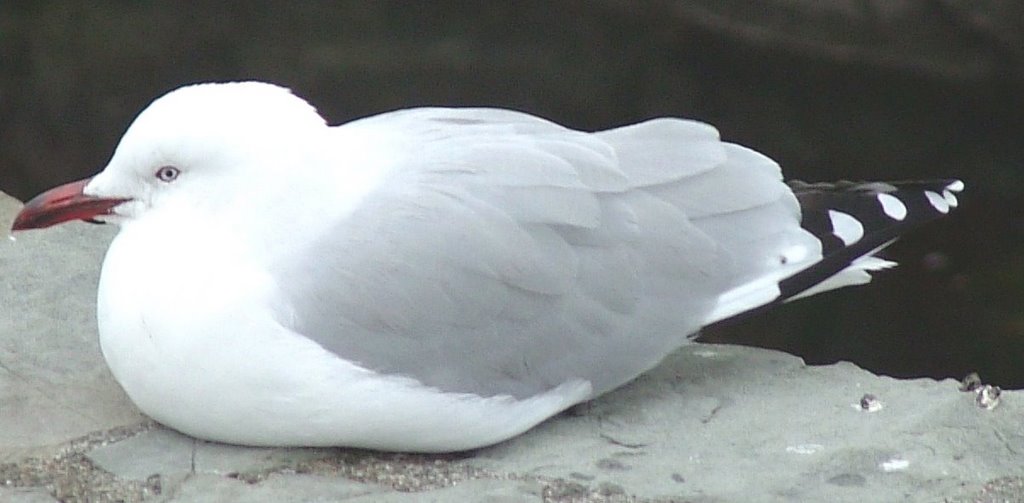 I went to all the trouble of writing a post (big hardship) yesterday and it's not on here! I even responded to two comments too, which is something I have to admit I am guilty of of not doing often enough, and those responses haven't been added to either! Well as a result I'm feeling a little bit petty tonight (it's my blog, I'm allowed) - may a gull fly over whoever is responsible.
Monday, 13 November 2006
I Went On A Shooting Spree Yesterday
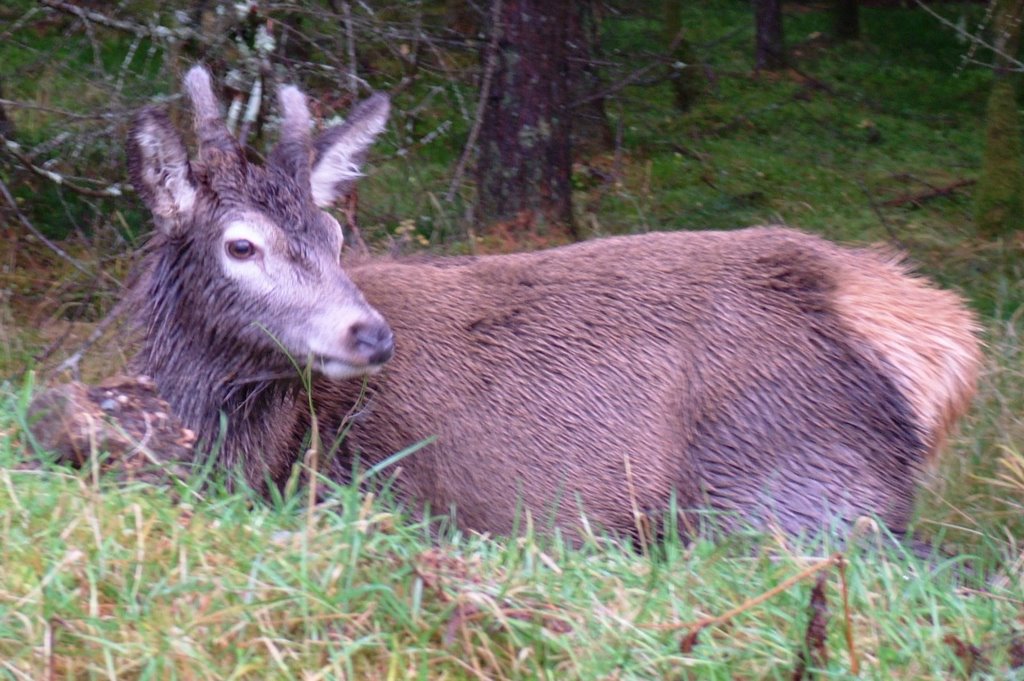 Deer stalking is fun! I must have shot about a dozen or so, possibly more. But don't worry no deer were harmed in any way, it was strictly a shooting by camera adventure.
I spent most of the afternoon shooting hinds and juvenile males from a distance of about 30 metres or so which normally I would be perfectly happy with but if I had a camera with a decent sized zoom I could have had some great group shots. Instead I had to get in close to the animals to get any shots at all, which on a blustery day like yesterday is not so easy to do. Luckily I had a Ghillie to guide me, without his knowledge and help I probably wouldn't have got within 100 metres of them. On my own they probably wouldn't have heard me coming (I'm quite a quiet person honest) or seen me coming (I can be surprisingly inconspicuous when it suits me) but they would have smelt me before I even saw them. And it's not because I stink, honest I do wash daily, its just deer have a very powerful sense of smell and I had no real clue how to stalk deer before yesterday.
Although I go out on the Scottish wilderness as often as I can and consider myself fairly knowledgeable when it comes to the countryside without expert stalking help I would have struggled. I knew before we started that you had to travel downwind but with the wind being so strong and the direction that it was blowing constantly changing I wouldn't
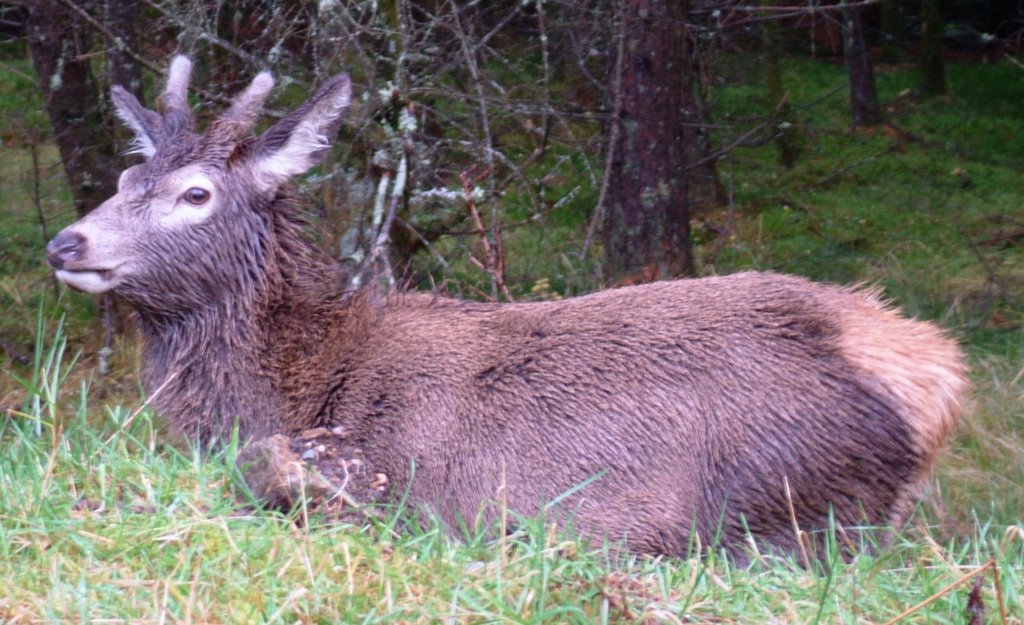 have known how to stay downwind. If I had been on my own I would probably have got frustrated by the weather sabotaging my every attempt to stay downwind that I would probably have tried the direct approach by just walking straight towards them and would never have gotten even remotely close. Just as well Guides who stalk deer for a living are much more skilled and patient than I am.
The most surprising thing of the day was for me was what I enjoyed the most. It wasn't enjoying the deer in their own environment, after all Deer aren't all that rare in Scotland, there's around 300,000 of
 them of them living here. I can walk a couple of miles down the road and come across one if I'm quiet enough. It wasn't even being in the Highlands, gorgeous stunning awe inspiring landscape that it is. The best part of the day was just spending some time with the guide whose knowledge of the landscape and the animals within you just cannot buy. Well I suppose technically I was buying it, but shhh - don't be putting facts into this story. It's the intimate knowledge that the guide had of each animal's character and the stories that he whispered in my ear throughout the afternoon that made me forget that the rain was off and on all day and that I was as a consequence soaked to the skin. I didn't care that I was wet, I didn't even care that I hadn't been able to make this trip 3 weeks ago, when it was in the middle of the rutting season when I really wanted to go but due to work commitments couldn't. Ok so it might have been a bit more impressive watching the bravado of the Stags competing for the attention of the hinds in the hope of getting a years worth of sex in the space of a couple of weeks, but then again that might have just reminded me of my own unimpressive sex life and I probably don't need to do that to myself. The knowledge and the passion that the guide had for the work that he did was addictive, the more he told me the more I wanted to know, and the more I knew the more carried away I got.
But even the experts can get it wrong sometimes. All afternoon we had only come across one Stag and he was so far away that I wasn't able to get a decent picture, with the distance being out of reach of the zoom he was so camouflaged with the environment that he just blended into the landscape behind. That should have been my best opportunity to get the stag money shot if we had gotten close enough because after rutting season the Stags and all chance of sex has gone they are no longer interested in hanging around with other deer. So for about, I don't know, maybe about 2 hours we focused our efforts getting close to a group of hinds and young males and for another hour I listened intently as the guide told me, in his in his light-Highland accented whisper, the different characters of each animal when a faint a noise behind made me look round. And there was this impressive looking stag staring back at me.
The first thing I noticed was the antlers and how sharp they looked. The second thing was the distance between us, there was only about 5 metres between me and those antlers. Excitement was soon replaced by a 'what the hell do I do now' moment. For a while man and beast, that's me and big boy with sharp antlers, had a moment where we stared poker-faced at one another not sure which one us was going to move first. At this point I realised that the stag's approach to us must have gone unnoticed by the guide who was at this point lying on the Heather next to me but facing the other direction. I had enough wits about me to realise that I didn't want to spook the Stag by making too much noise. Spooking it could go one of two ways, it could run away or it could see me as a threat and decide to deal with the threat, me, head on. I knew what way I preferred but I wasn't taking any chances. So in an effort to try and get the guide's attention without making too much noise or strange movements I tried to make some obvious, but quiet, guttural noises in my throat. Unfortunately I think at this point my guide must have thought that I was just a typical city person who couldn't stay quiet for more than 3 hours at time without getting restless.
Realising this approach wasn't working, I tried the barely audible whisper
"5 o'clock, Stag, 5 metres ...... if that .... what ... the .... hell ....do ... I ... do???? "
The instant reply came back "Don't stare!"
"Bugger! Too late!"
"Ok keep you eye on him, but tilt your head so you aren't looking straight on."
And just at that moment the Stag scattered. I tried to get a shot off before he disappeared but in all the excitement I'd left the camera running and with the cold and the wet to contend with the batteries didn't have enough juice. I was clumsily fumbling about in my jacket pocket for the spare batteries when the guide pointed out the reasoning for the Stag running away, a Golden Eagle flying high above us. I've never had the pleasure of watching a Golden Eagle in the wild before and in all honesty I didn't really expect to see one yesterday. It was a spectacular sight. However I am just ever so slightly gutted. By the time I got the spare batteries in the camera the right way round both the Stag and the Golden Eagle were out of sight. But damn what a day! Who knew a cold, wet, dreich, wintry day could be so much fun....
Sunday, 12 November 2006
Digging Into Your Family's History Should Come With A Warning
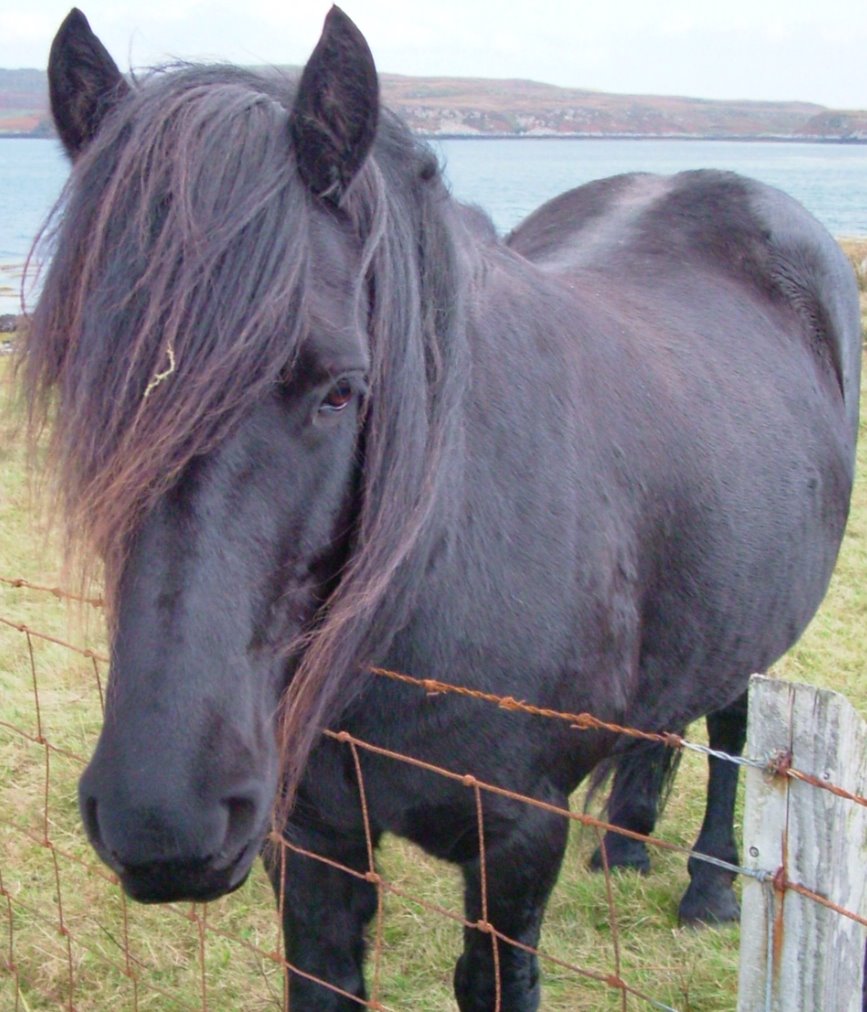 It seems more and more people are interested in finding out where they came from and so Ancestor.co.uk is allowing people to have a free look at the passenger lists of the ships which took Scottish emigrants to the Americas. The Mitchell Library in Glasgow also allows people to have a look at the Poor Law records which detail the poverty and suffering of those that came before us. But anyone with a romantic notion of their ancestral past should think carefully before investing time and energy researching their family history.
It might be my sick sense of humour but as well as being slightly disturbed at the image I couldn't help but laugh when I read the story of the Australian who researched the details of his ancestor's transportation to the colonies. He assumed his forefather had been on the prison ship for rebelling against the famine and the Crown by stealing corn to put food on the table so that his family may survive to see the next morning. Imagine his surprise when he discovered the documentation showing the reason for the one-way trip to Botany Bay was for his carnal knowledge of horses. And to think that Australians like to make fun of the Kiwis for sheep shagging.
Saturday, 11 November 2006
For Those That Made The Sacrifice Then And Those Who Will In The Future

How do you do, Private William McBride,
Do you mind if I sit down here by your graveside?
And rest for awhile in the warm summer sun,
I've been walking all day, and I'm nearly done.
I see by your gravestone you were only 19
When you joined the great fallen in 1916,
I hope you died quick and I hope you died clean
Or young Willie McBride, was it slow and obscene?
Did they Beat the drum slowly, did the play the pipes lowly?
Did the sound the death march as they lowered you down?
Did the bugles sound The Last Post in chorus?
Did the pipes play the Flowers of the Forest?
Did you leave a young wife or a sweetheart behind
In some faithful heart is your memory enshrined?
Though I know that you died back in 1916,
In that faithful heart are you forever 19?
Or are you a stranger without even a name,
Enclosed and forever behind a glass pane,
In an old photograph, torn and tattered and stained,
And fading to yellow in a brown leather frame?
Did they Beat the drum slowly, did the play the pipes lowly?
Did the sound the death march as they lowered you down?
Did the band play The Last Post in chorus?
Did the pipes play the Flowers of the Forest?
The sun shines bright on the green fields of France;
The warm summer breeze makes the red poppies dance.
The trenches are scattered long under the plow;
No gas and no barbed wire, there's no guns firing now.
But here in this graveyard that's still No Man's Land
The countless white crosses are mute where they stand
To man's blind indifference to his fellow man.
And a whole generation that were butchered and damned.
Did they Beat the drum slowly, did the play the pipes lowly?
Did the sound the death march as they lowered you down?
Did the band play The Last Post in chorus?
Did the pipes play the Flowers of the Forest?
I can't help but wonder, young Willie McBride,
Do those who lie here really know why they died?
Did they believe when they answered the call,
Did they really believe that this war would end wars?
The suffering, the sorrow, the glory, the shame
The killing, and the dying, it was all done in vain,
For young Willie McBride, it all happened again,
And again, and again, and again, and again.
This song was written after after the writer visited a military cemetery in France. It does a fine job of illustrating the meaningless absurdity of war. The First World War was the last real trench war and in France and Belgium battles could last weeks or months without any progress.
A researcher from a Belgium war museum has delved in a stack of burial records to find the real Willy McBride. Among the 1,700,000 names he found ten William Willy McBride's, but only one died in 1916 at the age of 19.
During the First World War No Man's Land was clearly defined by the trenches. Sometimes the contending parties where so close to each other that they could overhear the conversation of their opponents and many men, unaware of the nearness of the enemy snipers, died on their first day in the trenches.
In contrast with what the term might suggest No Man's Land was by no means abandoned. Under the cover of darkness the parties continuously repaired or extend the barbed wire fencing and carried out reconnaissance missions. Consequently artillery shelling of No Man's Land was common. Those who got injured often had to suffer a whole day before being rescued, while corpses were seldom salvaged.
The Last Post and The Flowers of the Forest are compositions associated with the final farewell.
In wars of a previous age bugles and drums marked the phases of a soldier's day, which started with the wakeup call Reveille. At the end of the day officers, accompanied by bugle players and drummers, made a round along the posts. The start of this round was announced by The First Post and the end by The Last Post, therewith signalling that all sentry posts were manned and that it was safe for off-duty soldiers to go to sleep. In the course of time The Last Post was incorporated into funeral and memorial services as a final farewell and symbolises that the duty of the fallen is over and that they can rest in peace.
The Flowers of the Forest is a poem written in the mid-1750's. It refers to the Battle of Flodden, which took place in 1513 between the Scots and the English. The outcome was disastrous for the Scots as it is estimated that about 10,000, including King James IV of Scotland, were killed. The Flowers of the Forest, traditionally played on a bagpipe, has become a lament for lost relatives, whereas the bugle call The Last Post is a final salute for fallen fellow soldiers.
Sadly just as they did then, men are still making that same sacrifice today.
Subscribe to:
Posts (Atom)